It’s that time of the year when Assam is filled with the spirit of Rongali Bihu, also known as Bohag Bihu — one of the most vibrant and joyful festivals of the state. The festival reflects the rich culture and traditions of Assam and is celebrated with music, dance, and community gatherings.

With its roots deeply connected to the rural lifestyle of the Assamese people, the Rongali Bihu Festival marks the arrival of the spring season. It brings with it colorful celebrations, traditional music, energetic dances, and a festive atmosphere across the state.
This year, Bohag Bihu 2026 will be celebrated from Tuesday, 14th April to Monday, 20th April 2026. The festival is not only about celebrating a good harvest and prosperity. It is also a time when families and communities come together, enjoy nature, and celebrate life with enthusiasm.
Bohag Bihu 2026: Important Festival Details
| Detail | Information |
|---|---|
| Festival Name | Bohag Bihu (also known as Rongali Bihu) |
| Dates in 2026 | 14 April 2026 – 20 April 2026 |
| Significance | Marks the Assamese New Year and the arrival of spring |
| Main Celebrations | Bihu dance, Husori performances, traditional food, community gatherings |
Three Types of Bihu Celebrated in Assam:
Not many people know this, but Assam actually celebrates Bihu three times a year, and each one has its own meaning and mood.

- Bhogali Bihu or Magh Bihu is celebrated in January and is all about feasting and fun after the harvest season.
- Bohag Bihu or Rongali Bihu is celebrated in April and marks the Assamese New Year and the arrival of spring.
- Kongali Bihu or Kati Bihu is celebrated in October and is a quieter, more reflective festival observed during a lean agricultural period.
Among all three, Rongali Bihu is the most festive and widely celebrated. It is the one that truly defines the Assamese identity.
History & Cultural Significance of Rongali Bihu:
Rongali Bihu, also known as Bohag Bihu, is a festival that holds a special place in the hearts of the Assamese people. It has been celebrated for generations and represents the spirit, traditions, and cultural identity of Assam.
During this time, streets become lively and festive. Traditional Bihu songs are heard everywhere, and the energetic beats of the dhol (a traditional drum) fill the air with excitement. The festival also marks the beginning of a new agricultural year, when farmers pray for prosperity and a good harvest.
From watching energetic Bihu dance performances to enjoying traditional Assamese food, Rongali Bihu is a time when people come together to celebrate their culture and strengthen community bonds.
Celebration & Rituals of Rongali Bihu Festival:
During this spring festival, the air is filled with the fragrance of freshly bloomed flowers, the rhythm of traditional drums, and the happy laughter of loved ones. The rituals of Bohag Bihu are truly something special and worth experiencing!
The celebrations begin with Goru Bihu, the worship of cows. Cows play an important role in Assamese agriculture and rural life.
After this comes Manuh Bihu, the main day of celebration when people wear new clothes, seek blessings from elders, and take part in cultural activities.
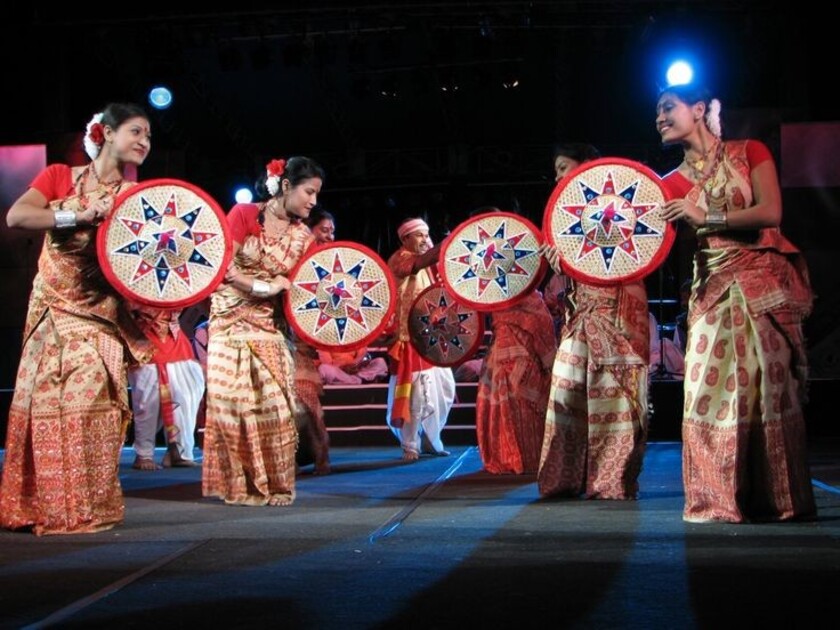
One of the highlights of the festival is Husori, a traditional group performance where young men and women sing and dance together while visiting homes in the community. The performances are accompanied by traditional instruments like the dhol (drum), pepa (buffalo horn pipe), and gagana (a traditional bamboo instrument).
The cheerful Bihu Geet (folk songs) and Bihu Jhumur dances add even more excitement to the celebrations. In some places, a ceremonial bonfire known as Meji is lit to symbolize purification and a new beginning.
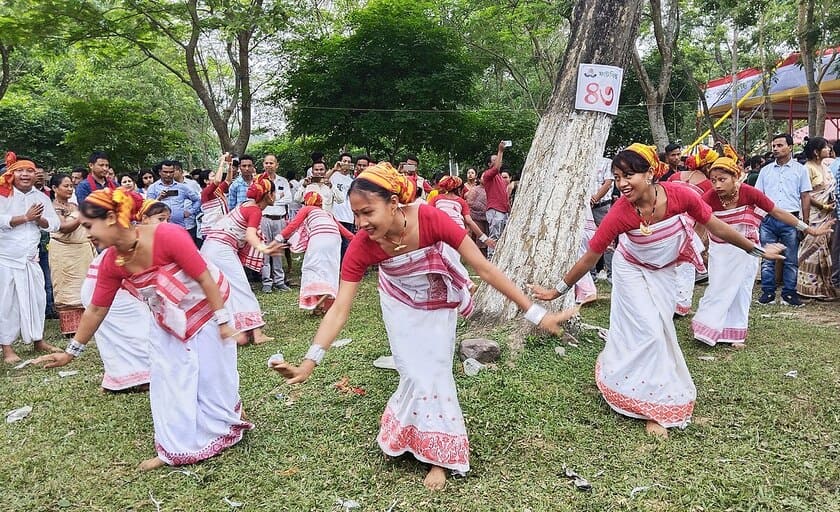
The beauty of Rongali Bihu lies in how it brings people together — young and old, from every part of society. The colourful decorations, traditional food, music, and cultural performances create a joyful atmosphere throughout the state.
It is a time for families, friends, and communities to celebrate Assamese traditions and share meaningful moments together. Bihu Husori performances, traditional cuisine, Bihu Geet, and energetic dance performances make the festival lively and memorable.
The Seven Days of Rongali Bihu (Xaat Bihu):
One of the lesser-known but truly fascinating things about Bohag Bihu is that it is not just one single celebration. It is actually observed across seven phases, which together are called Xaat Bihu — meaning “Seven Bihus.”

Each day has its own name and significance:
- Chot Bihu — The first day, when preparations begin
- Raati Bihu — The night celebration with songs and dance
- Goru Bihu — The worship of cows, which falls on the last day of the Assamese month of Chaitra
- Manuh Bihu — The main day for people, marked by new clothes and blessings
- Kutum Bihu — The day of visiting relatives and strengthening bonds
- Mela Bihu — The community fair day full of cultural events
- Chera Bihu — The closing day, bringing the festivities to an end
This structure makes Bohag Bihu one of the most thoughtfully layered festivals in India — every day has purpose and meaning.
Traditional Bihu Dress for Men and Women:
Bihu is also the best time to see the traditional clothes of Assam. The clothes worn during this festival are not just about looking good — they show the pride and love people have for their culture.
Women wear the beautiful Muga silk Mekhela Chador, a traditional two-piece Assamese dress known for its elegance and cultural significance. They also wear traditional Assamese jewellery and place the Kopouphul (Foxtail Orchid — Assam’s state flower) in their hair.
Men usually wear a white dhoti and a Muga silk shirt, along with a traditional Bihuwan (Gamosa) tied around their head or neck. The gamosa is a white cotton cloth with red woven borders and is one of the most recognised symbols of Assamese culture. It is often offered to elders and guests as a mark of respect.
Bihutoli: Cultural Grounds Where Bihu Celebrations Take Place
The real soul of Bohag Bihu is found at the Bihutoli — open grounds and cultural stages that are set up in towns and villages all across Assam during the festival days.
At a Bihutoli, you can watch Bihu dance shows, Husori performances, folk music programmes, and live performances by popular Assamese singers and artists. The atmosphere is full of energy, and people of all ages — children, young people, and elders — come together to enjoy and celebrate. These events are also called Bihu Mela, Basanta Utsav, and Bihu Sanmilan in different parts of Assam, and they usually go on well into the night.
If you ever get a chance to visit a Bihutoli, please do not miss it — you will carry that memory with you for a long time.
Traditional Assamese Food Prepared During Bihu:
No festival in Assam is complete without its special food, and Bohag Bihu is no different. In fact, the food made during Bihu is one of the most loved parts of the whole celebration.
Families make Pitha (a type of rice cake made in many different ways), Laru (small sweet balls made from coconut or sesame seeds and jaggery), Chira (beaten rice), Doi (curd), and Jolpan (a light morning meal made from different rice-based items). All these are shared with guests, given to neighbours, and eaten with great happiness during the festive mornings. These recipes have been made by families for many generations, and there is a certain warmth and joy in eating them during Bihu that words cannot fully explain.
Bohag Bihu Is Now Celebrated All Over the World:
Over the years, Bohag Bihu has spread far beyond the borders of Assam. With the help of social media and digital platforms, people across the world now celebrate and share the spirit of Bihu. Assamese communities living in different parts of India and abroad organise their own Bihu events to keep their traditions alive.
During the festival days, you will see Bihu dance videos getting a lot of views online, Bihu songs becoming popular on music apps, and live events being shown on YouTube and other platforms. This is something truly heartwarming — it shows that no matter where an Assamese person is, Bihu always finds its way to them.
Summarising…Why You Must Be in Assam to Enjoy the Spirit of Rongali Bihu Festival
Assam during Bohag Bihu 2026 has become a sight to behold, with the entire state buzzing with joy and excitement. The festive atmosphere is contagious, and you’ll find yourself dancing to the beats of the Bihu songs and joining in the merriment with the locals. The colors, the folk music, the food, and the camaraderie of the Assamese community will leave you with memories that will last a lifetime.
So pack your bags, put on your best clothes, and come to Assam this April. Bohag Bihu 2026 is from 14th April to 20th April — and we promise, it will be one of the best experiences of your life. Come, join the celebration, and let the joy of Assam stay with you forever!
FAQ’s:
Bohag Bihu, also known as Rongali Bihu, is the most vibrant festival of Assam that celebrates spring, agriculture, and the Assamese New Year.
Bohag Bihu 2026 will be celebrated from 14 April to 20 April 2026 in Assam, marking the beginning of the Assamese New Year and the arrival of spring.
Bohag Bihu is important because it marks the start of the new farming season and celebrates Assamese culture through music, dance, food, and community gatherings.
The Bohag Bihu celebration includes Bihu dance, Husori performances, traditional music, community feasts, and cultural events across Assam.