Spiti Valley Tour with Family
Published: byJignesh Gohel,02 May, 2026
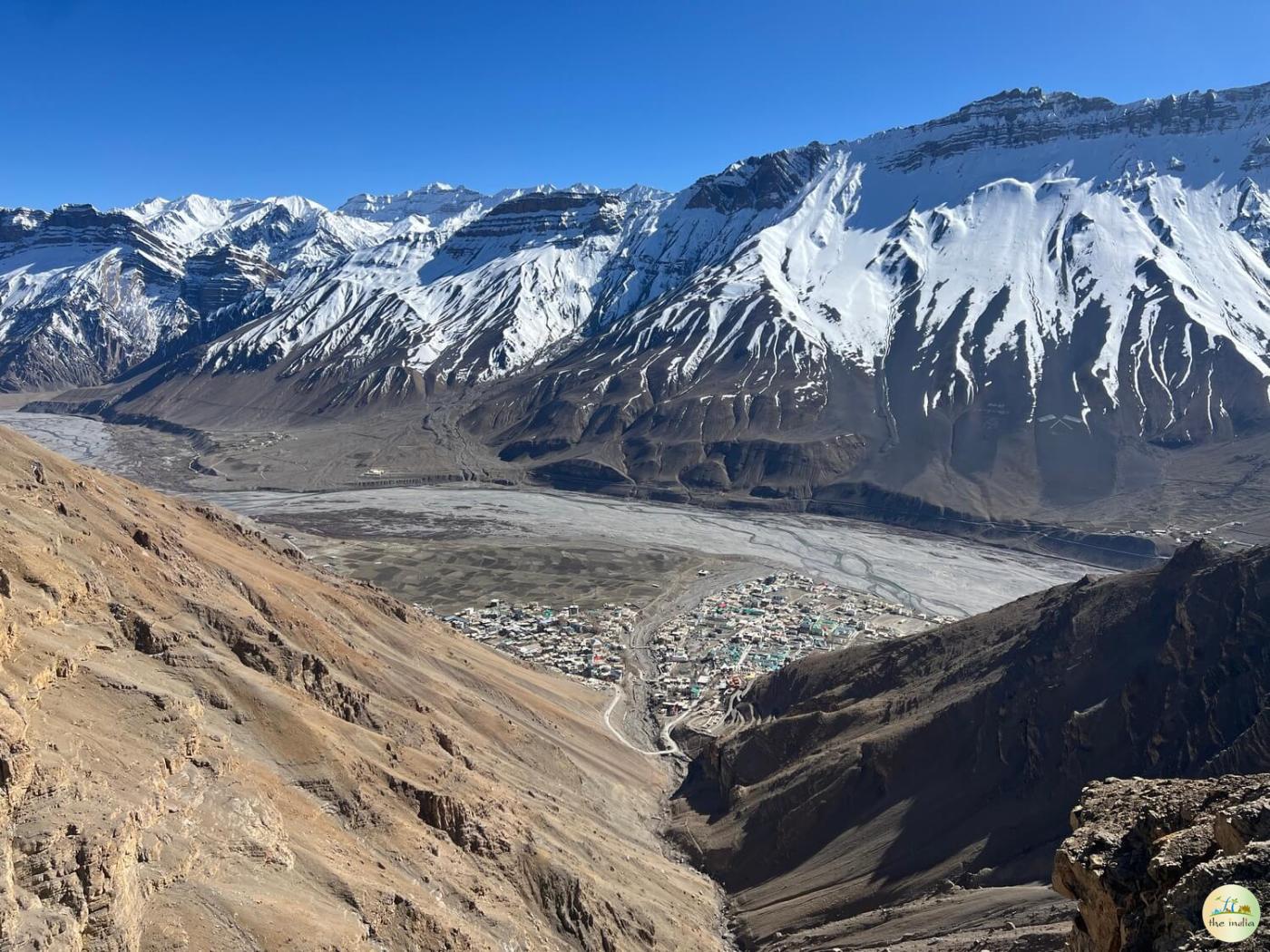
There are some destinations that stay on your mind for years before you finally get to experience them. Spiti Valley was one such dream for me. Nestled deep in the rain shadow of the Himalayas, this remote cold desert of Himachal Pradesh is unlike any other place in India — it is raw, rugged, spiritual, and extraordinarily beautiful. It is a landscape that humbles you and fills your heart at the same time.
The trip had been planned for quite some time, but we were waiting for the right window — and that window arrived when my son Aarav's school exams got over and his summer vacation began. This time, it was not going to be a solo adventure or a trek with friends. This was a family trip: Aarav, my wife, and I, embarking on a once-in-a-lifetime journey to one of India's most extraordinary destinations.
We flew from Ahmedabad to Chandigarh, and from there our road journey took us through the enchanting landscapes of Shimla, Kinnaur, and Spiti over nine days that I will never forget. Whether you are planning a family trip, a solo adventure, or a journey with friends, this travelogue will give you a complete guide to the experience — day by day, place by place, and moment by cherished moment.

| Duration | 9 Days / 8 Nights Package |
| Base City | Ahmedabad, Gujarat |
| Best Time to Visit | April to June (summer) | September to October (autumn) |
| Route | Ahmedabad → Chandigarh → Shimla → Jeori → Sarahan → Kalpa → Sangla / Chitkul → Kalpa → Kaza → Tabo → Jeori → Naldehra → Chandigarh → Ahmedabad |
| Travel Mode | Flight (Ahmedabad–Chandigarh) + Road (SUV with local driver) |
| Ideal For | Families, Adventure Seekers, Nature Lovers, Spiritual Travellers |
| Important Note | Carry warm clothing even in April–May. Temperature drops to -5°C or below at night in Kaza and Tabo. |
We planned our entire trip with the help of a friend Mr. Jatin Joshi who is doing Spiti and Ladakh trip since more than 15 years and having very good local presence. He guided and mentored during entire tour and made it possible to complete the same without any problem.
We followed below itinerary:
| Day | Route & Highlights |
|---|---|
| Day 1 | Ahmedabad → Chandigarh (Flight) → Shimla by Road |
| Day 2 | Shimla → Sankat Mochan Temple → Kufri → Tanni Jubbar Lake → Jeori |
| Day 3 | Jeori → Sarahan (Shri Bhimakali Temple) → Kinnaur Valley Cliff Road → Kalpa |
| Day 4 | Kalpa → Sangla Valley → Chitkul (ITBP Post) → Back to Kalpa |
| Day 5 | Kalpa → Rola Cliff → Khab Sangam → Nako Lake → Tabo → Kaza |
| Day 6 | Kaza → Key Monastery → Chicham Bridge → Komic Village → Hikkim Post Office → Tabo |
| Day 7 | Tabo → Gue Monastery → Lapcha Zero Point (China Border) → Jeori |
| Day 8 | Jeori → Sutlej River Rafting → Naldehra |
| Day 9 | Naldehra Golf Course → Jakhu Temple → Chandigarh → Ahmedabad (Flight) |
Our much-awaited journey finally began, and there is no feeling quite like it — that buzz of excitement mixed with the chaos of last-minute packing and airport check-ins! We took an early morning flight from Ahmedabad, leaving behind the familiar heat of Gujarat and its blazing 40°C summer. The flight to Chandigarh was smooth and on time, and we landed by noon.

Our driver, Mr. Shravn Kumar, was already waiting for us at the airport. From there, we began our road journey towards Shimla, and within a few hours the air around us had transformed completely. By the time we reached Shimla and checked into Hotel The Euphoria Grind, the temperature had dropped to a cool 15–18°C — going from 40 degrees to under 20 on the same day is quite the experience, especially for a family travelling from Gujarat!
After freshening up, Mr. Shravan took us to the famous Mall Road in the evening.

One handy tip: there is a lift available at the base that takes you directly up to the Mall Road, saving you a long and steep climb — extremely useful when travelling with children or if you are short on time. We took the lift, were up in five minutes, explored the lively shops, and ended the day with a delicious dinner at the hotel.
📍 Shimla Tip: Take the lift to Mall Road — it saves a steep climb and is especially convenient for families with young children.
After a hearty breakfast, we set off towards Jeori — our gateway to the Kinnaur Valley and, eventually, Spiti. Our first stop was the Sankat Mochan Hanuman Temple in Shimla itself.

Surrounded by pine-covered mountains, this beautiful temple with its distinctive wooden architecture immediately sets the mood for the Himalayan journey ahead. The complex also has shrines for Lord Ganesha and Lord Ram, and we spent some peaceful time taking blessings.
Our next stop was Kufri, and I want to be honest here because fellow travellers deserve straightforward advice: Kufri is, in my experience, an overhyped destination.

It was our first visit, so we took the horse ride from the base to the hilltop — but the experience at the top felt unstructured and chaotic. Pricing was unclear, vendors were persistent, and the activities had no clear system. If you are travelling to Spiti Valley with family, I would strongly recommend skipping Kufri or spending no more than 30 minutes there. There are far more beautiful experiences ahead.
A hidden gem on this route is the Tannu Jubbar Lake — not on the national highway, but worth the short interior detour.

It is a serene, beautiful lake surrounded by apple orchards and mountain villages, and the drive itself through terraced apple farms cascading down the hillsides is absolutely delightful.
We reached Jeori by late evening and checked into Hotel Himalayan Heritage, located right on the highway. Clean rooms, helpful staff, and a comfortable stopover for anyone heading towards Spiti or Kinnaur.
✏️ Honest Advice:
Skip Kufri if you are heading to Spiti Valley — it will cost you 3–4 precious hours. Visit the Tannu Jubbar Lake instead for a far more peaceful and scenic experience.
Today was the one we had all been waiting for. After breakfast, we drove up to Sarahan village to visit the magnificent Shri Bhimakali Temple — and from the very first glance, it left us absolutely speechless.

The Bhimakali Temple is one of Himachal Pradesh's most revered temples, dedicated to Goddess Mahakali — a local form of the divine Mother Goddess, and one of the 51 Shakti Peethas of India. What makes this temple truly extraordinary, beyond its religious significance, is its architecture. It is built in the traditional Kath Kuni style — alternating layers of deodar wood and stone, interlocked without any mortar. This technique gives the structure natural earthquake resistance, which is why it has survived well over a thousand years.
The multi-storied pagoda-style towers rise gracefully against the snow-covered Shrikhand Mahadev and Kinnaur Kailash peaks in the background. The carved wooden doors and windows are works of extraordinary artistry — intricate geometric and floral patterns, deities, and mythological scenes etched into deodar wood with breathtaking precision. The entire complex feels like a step back into ancient India, where devotion and craftsmanship were one and the same. We spent about an hour here — one of the most memorable stops of the entire trip.
Back on our route, about thirty minutes into the drive from Jeori, we came across the iconic Kinnaur Valley Cliff Road — a stretch carved directly into the sheer face of a rocky mountain cliff, with tunnels and overhangs as the river roars far below.

Nothing really prepares you for experiencing this in person. We stopped for a while to take photographs and simply marvel at how human determination can carve a path through the most impossible terrain. Aarav was absolutely awestruck.
By evening, we reached Kalpa and checked into The Mountain Serenity — a wonderful pure-vegetarian hotel with a spectacular terrace view of the snow-covered Kinnaur Kailash mountain.

As we sipped warm masala chai on that terrace with the majestic mountain glowing in the last light of the sun, the temperature was around 5°C — but honestly, no one felt the cold. That evening was pure magic.
🕌 Must Visit: Allow at least 45–60 minutes at Shri Bhimakali Temple in Sarahan. The wood carvings and pagoda architecture are among the finest examples of traditional Himalayan craftsmanship anywhere in India.
I love early mornings in the mountains, and Kalpa delivered one of the finest I have experienced. Before the rest of the family was up, I walked through the quiet village lanes watching the first light touch the snow-capped Kinnaur Kailash peaks. After my morning walk and a cup of black coffee, I woke Aarav to show him the view — the delight on his face was worth every early alarm.

Before we set off, an important reminder for all high-altitude travellers: always eat a proper breakfast before driving in the mountains.
Carry at least 2–3 litres of water per person per day. Skipping meals at altitude increases the risk of nausea and mountain sickness far more than eating does. Stay hydrated, eat well, and rest when needed.
The drive to Sangla is scenic but expect stretches with potholes, so allow more time than you would anticipate. The reward is worth every bump — the Sangla Valley opens up into a wide, green bowl of mountains with the Baspa River running through it, flanked by apple and apricot orchards. One of the most beautifully situated valleys in Himachal Pradesh.
We drove further to Chitkul — the last village on the Indo-Tibetan border accessible to Indian tourists. Beyond the Nagasti ITBP Check Post, you need to arrive before 2:00 PM to continue into the restricted zone. We arrived at around 2:30 PM, so we could not proceed further — but Chitkul itself was wonderful.

For Aarav, the best part of Chitkul was something simple and joyful: snow. He had never touched real snow before, and I took him to the snow patches on the hillside near the riverbank. The way his eyes lit up — running his hands through it, throwing little snowballs, looking up at me with the biggest grin — that is a memory I will carry for the rest of my life.
On the way back through Sangla village, our driver introduced us to a wonderful local Tibetan café run by a local Tibetan family.

We tried vegetable momos and thukpa — simple, authentic, and packed with flavour. If you want to taste real local food of this region, a family-run Tibetan café is your best bet. We returned to Kalpa by evening, tired and content.
⏰ Important Note: To visit the ITBP Check Post at Nagasti near Chitkul, reach there before 2:00 PM and carry original government-issued photo ID for all members of your group.
Our first stop was just five minutes from the hotel — the Rolla Cliff viewpoint, locally known as 'Suicide Point.' Despite the dramatic nickname, the view is extraordinarily beautiful: the road winds through the face of a steep mountain, with a vast valley far below and the river a silver ribbon in the distance.

Aarav kept shouting into the valley, laughing each time his voice echoed back from the opposite mountain. He must have shouted a hundred times!
Day 5 marked a significant milestone: this was the day we truly entered the heart of Spiti Valley. As we departed Kalpa after breakfast, the landscape around us began to transform dramatically — the familiar green of Kinnaur giving way to an increasingly bare, otherworldly terrain of ochre and grey mountains.
We then drove to Khab village and the Khab Sangam Bridge — a place of genuine geographical wonder. This is where the mighty Sutlaj River and the Spiti River meet and merge.
The confluence is dramatic: two rivers of different colours joining together, the sound of rushing water filling the air. We sat on the rocks for a while, feeling small and grateful.
The drive through Spiti Valley towards Kaza is long, but it never feels tiring because the scenery changes constantly. Our driver stopped at the Leo Village viewpoint, where we met a person named Vijay running a small tea shop. He was from the Leo village and shared stories of his childhood — walking hours each way to reach school. These stories put everything in perspective.

We made a wonderful stop at Nako village, visiting the Nako Monastery and then walking through the village lanes to reach Nako Lake at 3,662 metres (12,014 feet).

Aarav spotted paddle boats and absolutely insisted on a ride — watching him pedal that little boat at over 12,000 feet, grinning from ear to ear, was one of the highlights of the whole trip. The boats are managed by locals with proper life jackets and safety measures, so it is perfectly safe for children.
Near the monastery, Aarav spotted local kids playing cricket and joined in within minutes — bowling and batting with children he had never met before, speaking a mix of Hindi and laughter as their universal language. These spontaneous moments are what travel is truly about.

We stopped at Tabo village en route to try Seabuckthorn tea (locally called Sibag Thon) for the first time — a tea made from the bright orange berries of the sea buckthorn plant, rich in vitamins and antioxidants, with a pleasant tangy taste. We reached Kaza by nightfall and checked into Pema Home Stay. The dinner was simple, local, and absolutely delicious.
🍵 Local Experience: Try Seabuckthorn (Sibag Thon) tea at Tabo village. It is a local speciality with excellent health benefits, especially useful for acclimatisation at high altitude.
Kaza sits at approximately 3,800 metres (12,500 feet), and I discovered this fact very clearly when I stepped onto the terrace at minus six or seven degrees Celsius that morning. My breath formed little clouds in the air, but a cup of black coffee and the extraordinary view — mountains all around, crystal-clear sky, absolute stillness — made every goose bump worth it.
After a local breakfast of roti with homemade chutney (the daily staple of Spiti Valley villages), we began our sightseeing. Our first visit was the Key Monastery (Ki Gompa) — one of the most famous and photographically stunning monasteries in all of Himachal Pradesh.

Perched on a conical hill overlooking the Spiti River, the white monastery with its red-roofed towers appears to grow organically out of the mountain itself. It is over a thousand years old, and the monks welcome visitors warmly. Walk through the prayer halls, admire the ancient thangka paintings and statues of the Buddha, and soak in the panoramic views of the valley below.
Next, we drove to the Chicham Bridge — a modern suspension bridge connecting Chicham village to the main road across a deep gorge.

En route, we had a wonderful and unexpected wildlife sighting: a herd of Himalayan Ibex — large wild goats with magnificent curved horns — grazing on the rocky slopes at over 13,000 feet. Spotting them in the wild was a genuine treat.

From Chicham Bridge, we drove up to Komic Village — one of the highest motorable villages in the world at approximately 4,547 metres (14,921 feet) above sea level.

The village is home to a beautiful monastery and offers sweeping panoramic views of surrounding snow peaks. Walk slowly here — the air is noticeably thin.
The day's highlight for Aarav came at Hikkim Village — home to the world's highest functioning post office at 4,440 metres (14,567 feet). This tiny post office, run by the Government of India, still accepts mail to be delivered anywhere in the world.
Aarav picked up two postcards, sat down, and carefully wrote messages to his grandparents. We posted them right there, from the top of the world. I cannot recommend this experience enough, especially for families travelling with children — it is the kind of activity that makes travel meaningful.

We returned to Kaza, rested, and drove to our overnight stay at Emma Spiti Stay in Tabo, run by the warm and welcoming Tenzin. Excellent food, cosy rooms, and Aarav spent the evening happily playing with Tenzin's toddler son — the perfect end to an extraordinary day.
✉️ Don't Miss: Post a letter or postcard from the Hikkim Post Office — the world's highest functioning post office at 4,440 metres. It costs very little and creates a memory that lasts a lifetime.
Day 7 gave us what I would consider the most extraordinary experiences of the entire tour — not just because of landscapes, but because of deeply moving encounters with history, faith, and the men who guard our borders.
After a warm breakfast at the Tabo home stay with a lovely river view from the terrace, we set off to visit the Gue Monastery near Sumdo village — not on the main highway, but absolutely worth the detour.

The Gue Monastery is remarkable for something that defies easy explanation: a 500-year-old naturally preserved human mummy. The mummy is believed to be that of Sangha Tenzin, a revered Buddhist monk who, according to local legend, voluntarily chose to end his physical existence through a deep meditative practice.
What makes this mummy genuinely astonishing is its state of preservation. Over five centuries after his death, Sangha Tenzin's body remains intact — his skin, teeth, and hair are preserved, and he still sits in a perfect posture. A rope is wound around his body, believed to have been tied to keep him upright during meditation. The mummy was discovered after an earthquake in 1975 shifted the earth around the burial site, and it is now enshrined in a glass-enclosed case inside the monastery.
The atmosphere is reverent and humbling. This is a sacred site, and visitors are expected to observe it with appropriate respect. It was one of the most thought-provoking moments of our journey.

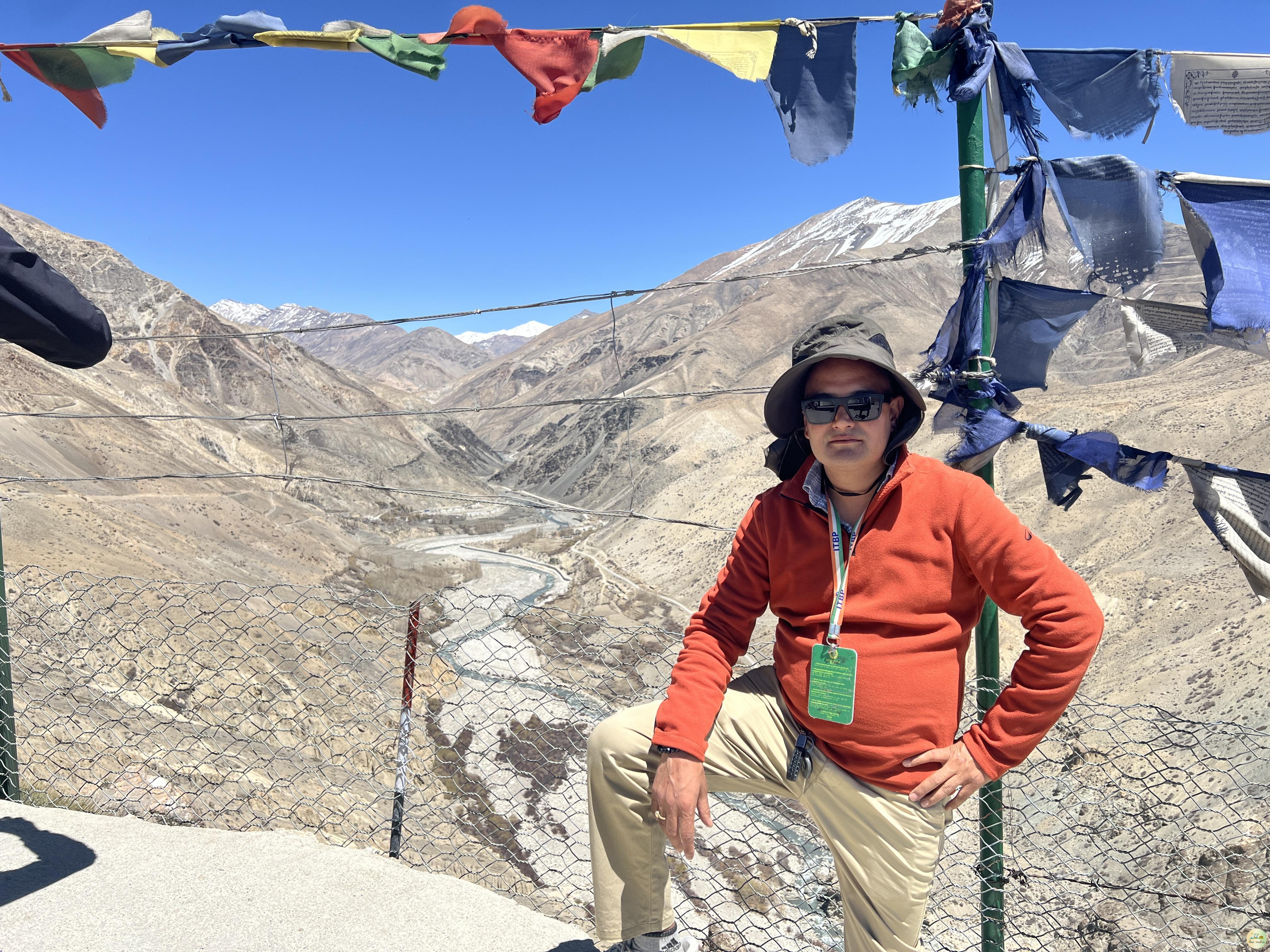
The Gue Monastery sits close to the India-China border and is secured by our Indian Army and ITBP. After a wonderful conversation with the jawans stationed here, they directed us to our next stop — the Zero Point near Lapcha, on the India-China (Tibet) border. This turned out to be the single most powerful experience of the entire tour.
How to visit: Reach Sumdo village and report to the ITBP Check Post before 2:00 PM. Carry original photo ID for every member of your group. The ITBP will register your entry, take your photograph, and issue a temporary identity card. From Sumdo, it is approximately 22 km to the Zero Point through two additional ITBP/Army checkpoints, taking 45–60 minutes. Photography of Indian military installations is strictly prohibited, but you may photograph the Tibetan landscape from the Zero Point itself.
Standing at the Zero Point, looking out at the Tibetan plateau stretching before you, feeling the fierce wind and bone-chilling cold even at midday — and knowing that our jawans spend months at a time in these extreme conditions to keep our borders secure — is an experience that moved me deeply. I urge every Indian traveller to make this visit.

After about an hour at the Zero Point, we drove back to Sumdo, stopped at the Black Rock Café at Khab Sangam for hot chai, and reached Jeori by evening.
📋 Border Visit Protocol: Reach Sumdo ITBP Check Post before 2 PM with original photo ID for all group members. Two additional checkpoints will be encountered en route to the Zero Point. Photography of Indian military installations is strictly prohibited.
After the intensity of the previous days, Day 8 offered a more relaxed and adventurous conclusion to our mountain journey. Our driver took us on an alternate scenic route that winds along the bank of the Sutlaj River through beautiful, less-travelled terrain — the older road used by trucks carrying Himachali apples, passing through forested hillsides and small riverside villages.
On this stretch, we spotted something we had not anticipated: river rafting on the Satluj.
A certified operator was running sessions, and the sight was immediately inviting. I want to reassure families: this is very different from the intense white-water rafting of Rishikesh. The Sutlaj here has gentle, manageable rapids, perfectly suitable for families including children, with all proper safety measures — life jackets, helmets, and a certified guide throughout. The one-hour session was thoroughly enjoyable, and even Aarav took to it with great enthusiasm.
After our rafting adventure, we continued to Naldehra — a beautiful and often overlooked destination near Shimla — where we checked into our hotel for the night, refreshed and happy.
🚣 Family Activity: River rafting on the Satluj near Jeori–Naldehra is family-friendly and ideal for first-timers. Nothing like the intense rapids of Rishikesh — safe, fun, and perfectly managed by certified operators.
Our last day in the mountains began with a very pleasant surprise. I had learned the previous evening about the Naldehra Golf Course — one of the oldest golf courses in Asia, built during the British era, set amidst beautiful cedar forests with excellent horse riding. Having been thoroughly unimpressed by Kufri, I was eager to give this a try as an alternative.

The experience was everything Kufri was not. The horse riding at Naldehra is completely organised: run by a union of local horse owners, pricing is fixed at Rs. 500 per person for a 45-minute to 1-hour ride through a 4–5 km forested route. The golf course entry fee is Rs. 50 for adults and Rs. 30 for children. The guide was knowledgeable, friendly, and pointed out the various Himalayan peaks visible from the course. No bargaining, no pressure, no confusion — just a genuinely delightful morning in the mountains.
If you are in Shimla, visit Naldehra instead of Kufri. The experience is far more organised, far more scenic, and far more representative of the real beauty of the Himalayan region.
🐴 Skip Kufri, Choose Naldehra: Horse riding at Naldehra Golf Course is fixed at Rs. 500/person, organised, and far more scenic than Kufri. Golf course entry is Rs. 50 for adults, Rs. 30 for children.
After our horse ride, we made our final stop: the Jakhu Hanuman Temple in Shimla — home to a spectacular 108-foot statue of Lord Hanuman visible from almost every part of the city.

We took blessings, spent some quiet time at the temple, and then began our drive to the Chandigarh airport.
Nine days, thousands of kilometres, mountains, monasteries, a 500-year-old monk, border posts, snow, rivers, and endless breathtaking skies. This is what travel is for.
Spiti Valley is not a destination for the faint-hearted — not because it is dangerous, but because it demands your complete attention, your willingness to slow down, and your openness to being genuinely moved. The landscapes are unlike anything else in India. The people are warm, resilient, and deeply connected to their land. The monasteries carry centuries of spiritual history. And the silence of those mountains on a clear night with stars blazing overhead is something I carry with me still.
If you are planning this trip, here is what I would emphasise most:
Spiti Valley will reward every effort you put into the journey. I have visited many extraordinary places across India, but this one holds a very special place in my heart — and I have a feeling it will in yours too.
Customize your dream vacation with our best India tour packages.
3(1 Reviews)
7D/6N
Kullu Manali Tour Package from Bhopal (6 Nights-7 Days)
 Madhya Pradesh, India
₹ 35,000
5(1 Reviews)
4D/3N
3 Nights 4 Days Shimla Package From Delhi Best Trip at Affordable Price
Delhi, India
₹ 10,999
4(1 Reviews)
4D/3N
Spectacular Shimla Tour Package from Chandigarh (3 Nights-4 Days)
Chandigarh, India
₹ 12,000

5(1 Reviews)
10D/9N
Shimla Manali Dharamshala Dalhousie Tour Package (9 Nights-10 Days)
Chandigarh, India
₹ 40,000
I really enjoyed reading your Spiti Valley Tour and fortunate to serve you during this tour with my Taxi service. It was such a great experience travelling with you and your family.